Tampilkan postingan dengan label mason. Tampilkan semua postingan

Senin, 01 Juni 2015

2016 Fruit Jar Annual Price Guide Now Available for Jar Collectors


 2016 Fruit Jar Annual by Jerry McCann

The all-new reference book is now available for immediate shipment to customers of North American Glass.

Softbound, spiral bound with 392 easy-to-read pages, with many jar photographs, drawings and period ads.

$60 plus shipping

For more information, and to order your copy of the book: http://www.gregspurgeon.com/fja2016.html

All-new and expanded, the HUGE new 2016 edition contains 392 pages, featuring...
  • Comprehensive PRICE GUIDE of fruit jars and related packer jars.
  • Cross referenced with Dick Rollers STANDARD FRUIT JAR REFERENCE
  • Listing information on availability, closures and history in the glass houses that manufactured or jobbed the jars.
  • 392 Pages Packed with Comprehensive Listings & Values
  • Feature Articles by well-known veterans of jar research
  • Fruit Jar Collector Directory
  • Softbound, spiral bound with 392 easy-to-read pages, with photos, drawings and period ads.


TABLE OF CONTENTS for 2016 Edition:

_______________________________________________
Findlay Antique Bottle Club
Website - Facebook - Twitter - Google+ ~ TwitShot
Sign up for our free newsletter!


Sabtu, 30 Mei 2015

New Fruit Jar Show & Get-Together June 13, 2015 Cambridge City Indiana


There's a new Fruit Jar collector event coming up in June!

Central Indiana Early Summer Fruit Jar Get Together/Show

Saturday, June 13, 2015


9:00am - 3:00pm

Huddleston Farm House Inn Museum
838 National Road
Cambridge City, IN 47327

The Huddleston Farmhouse is located approximately 60 miles east of Indianapolis and 20 miles west of Richmond on U.S. 40. [Google map link.]

Marty Troxell tells us his hopes & dreams for the get-together:
  • Friday eve socializing. My home will be open for awhile. 
  • [Overnight camping]
  • Saturday: the show/sale, more camaraderie, tearful goodbyes to those who must leave. 
  • Saturday eve: food (as yet to be determined), more show & tell, campfire socializing. 
  • Sunday morning: Clean up/ pack up, more tearful goodbyes.
  • The Midwest Fruit Jar Club meeting [in Muncie] (great opportunity for all who can go), and more goodbyes & maybe a tour for those who may not have made it earlier. 
  • Doesn't this sound good?!
See the official Facebook Event Page with lots of chatter: what jars are coming/ what peeps are coming / food, etc. Everyone's excited. ​

Call Marty Troxell for details -- (765) 478-3800


You can check out the nearby antique shops too. [Link

Nestled along the Old National Road and in the very heart of Antique Alley, Cambridge City could easily qualify as the best-kept secret in Wayne County. What’s the secret? The secret is that this quaint town is the home to ten antiques shops and malls, four eateries and three museums – all within walking distance of one other. Rich in history and filled with beautifully-restored homes, this picturesque town of 1,900 people has a small town feel and a huge heart. But it is the abundance of antiques shops and quaint eateries that make this a must-see weekend destination spot. Nine of the ten antiques shops are located in a 2-block stretch along the Old National Road in downtown Cambridge City, including Marty's shop:  

Doublehead Trading Company specializes in reclamation with hundreds of old doors, windows, fireplace mantels, porch columns, a large selection of collectibles and so much more. Marty has one of the largest glass jar displays in the area. 137 W Main St Cambridge City, IN.

___________________________________

SUNDAY JUNE 14, 2015


The Midwest Fruit Jar Club meeting is nearby at the Minnetrista Center's Cantina in Muncie. June 14, 2015 Sunday, 1:30 pm.

The Minnetrista is on the grounds of the Ball Brothers estates at
1200 N Minnetrista Pkwy, Muncie, IN 47303

http://www.minnetrista.net/directions-map/


Minnetrista: A Ball Family Legacy
In 1887, the Ball family moved its glass manufacturing business from Buffalo, New York to Muncie. Ball Brothers Glass Company became one of America's best known manufacturers of canning jars.

The Ball family purchased most of the land along the north bank of White River between Wheeling and Granville pikes in 1893. The name chosen by the family for the property was taken from a Sioux word, "mna" (pronounced mini) which means "water," and combined with the English word, "tryst," to form "Minnetrista," or, "a gathering place by the water."

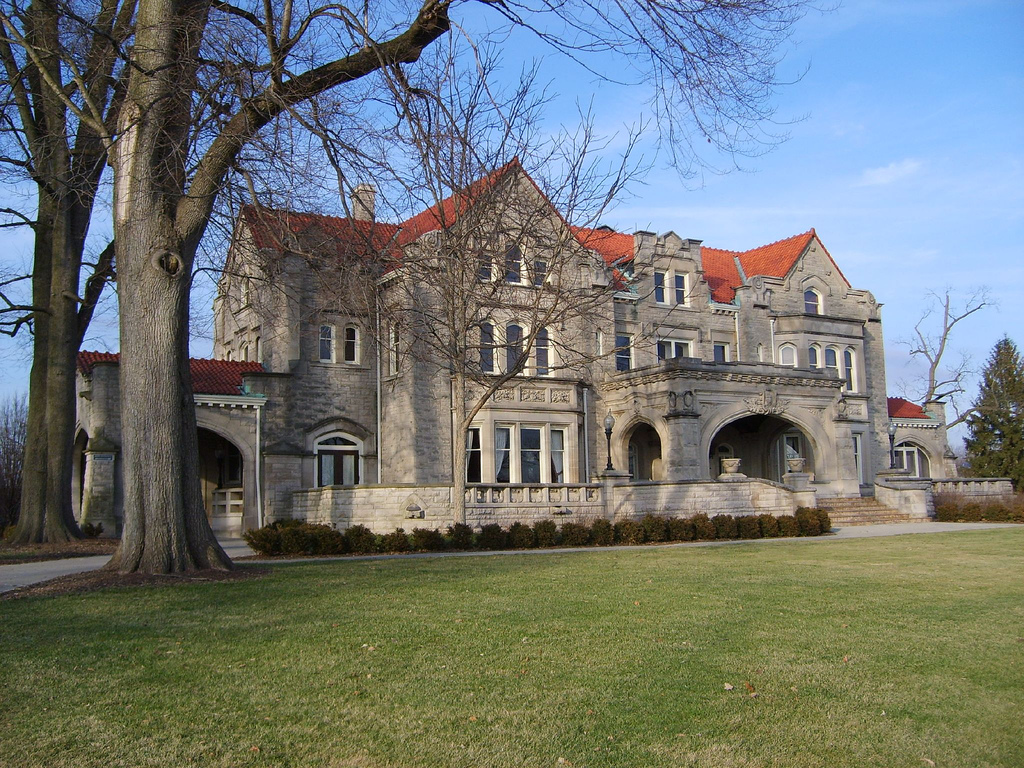
L.L. Ball house was remodeled in 1910.

The L.L. Ball House, today.

The Lucius Lorenzo Ball House on the grounds of the Minnetrista Center . 


The building is one of the five founding Ball brother's original Muncie homes. The brothers moved from New York to Indiana in the 1880s to relocate their glass manufacturing business. William H., Frank C., Edmund B., George A., and Lucius L. Ball, founded what is now Ball Corporation, prospered in business, married into Indiana families, and began engaging in a variety of community activities.

Read Dick Cole's History of the L.L. Ball House here.
_______________________________________________
Findlay Antique Bottle Club
Website - Facebook - Twitter - Google+ ~ TwitShot
Sign up for our free newsletter!

Kamis, 07 Mei 2015

Don't It Make Your Ball Jars Blue? or: Just What Made the Famous Ball Blue Glass Color? -- The Hoosier Slide, Indiana


Mason1.jpg


"It's all in the sand, baby!"

At one of our Findlay Bottle Club meetings, Jeff passed around a fruit jar that was a smooth-lip Mason's 1858, but in the familiar shade of aqua-ish-blue of Ball fruit jars. It is conventional wisdom that all "Ball Blue"-color jars were made by Ball (as no other fruit jar maker has jars in this famous shade), so it stands to reason that this Mason's 1858 was also made by Ball.  
What's up with "Ball Blue", you might ask? Why is only Ball glass that particular shade of blue? Jeff's answer --  "It's all in the sand, baby!"
Most of us know glass is made from sand. You might not have known that glass color comes from the mineral content in the sand that's used to make the glass. So, we wondered what was different about the sand that Ball used? How come no other company had sand that made their jars that particular shade? And why did Ball stop making jars in the signature color?


Turns out it was the sand from the once famous Indiana landmark, called the HOOSIER SLIDE in Michigan City, Indiana.

Vintage postcards of the Hoosier Slide.

Once the largest sand dune on Lake Michigan, the Hoosier Slide was a tree-covered tourist attraction, used for picnics and even weddings. 


Visitors enjoyed sliding down the loose sands.

Then stripped of its timber by the 1870's, it became a sand-blowing nuisance. 

Commercial sand mining began about 1890, when the Monon Railroad built a switching track along the south side of the dune. 

Also in 1890, natural gas was discovered in central Indiana, and glass factories started in the Muncie area. Large users of Hoosier Slide sand were the Ball Brothers in Muncie, Pittsburg Plate Glass in Kokomo, and the nearby Hemingway Glass Co.

The sand was found to be good for glass making, and thus the once loved Hoosier Slide was sold off, wheelbarrow by wheelbarrow. The great sand dune was reduced to nothing.


W. Manny Dieckilman, the son of a man who worked the Hoosier slide shares this info about the 3 men pictured at lower left of this postcard:

"The 3 men pictured on the train tracks with Hoosier Slide in the background are: left, Dan Hutton, Train Master of the Monon Railroad” center, on tracks is Henry Dieckilman, Foreman (working there for 25 plus years), on right, William Manny, owner of Hoosier Slide."
"Although I hold no memory of my father, who died when I was three in 1921, I am forever conscious of the footprints remaining from his labors in the late 1890's and early 1900's. For twenty-five years, six days a week, he pushed an iron-wheeled wheelbarrow, moving sand from Hoosier Slide onto gondola carts headed for the manufacturing of canning jars.." --W. Manny Dieckilman 


Henry Dieckelman is listed in the Michigan City, City Directory, 1913, as the Foreman of the Hoosier Slide Sand Co. [Source]


According to "Naturalization records : abstractions from declaration of intentions, Superior Court, Michigan City, La Porte County, Indiana", Henry came from Germany in 1880. (Note the different spelling of his last name from his son, W. Manny Dieckilman.) [Source]

Read more of W. Manny Dieckilman's memories on emichigancity.com.


William B. Manny, proprietor of the Hoosier Slide Sand Company, is profiled in a1904 book [here].


Dan Hutton was listed in the Railroad Switchmens Union in 1901 [Source] as Michigan City's Monon Yardmaster [Source].


hoosierslide.jpg
Once Indiana's most famous landmark, Hoosier Slide was a huge sand dune bordering the west side of Trail Creek where it entered Lake Michigan. At one time it was nearly 200 feet tall, mantled with trees. Cow paths marked its slopes and people picnicked upon its crest. Climbing Hoosier Slide was very popular in the late 1800's with the excursionist crowds who arrived in town by boat and train from Chicago and other cities. The summit, where weddings were sometimes held, afforded an excellent view of the vast lumberyards which then covered the Washington Park area.
With the development of Michigan City, the timber was cut for building construction and the sand began to blow, sometimes blanketing the main business district of the town on Front St., which nestled near its base.
When it was discovered that the clean sands of Hoosier Slide were useful for glassmaking, the huge dune began to be mined away. Dock workers loaded the sand into railroad cars with shovel and wheelbarrow to be shipped to glassmakers [and other places].
Over a period of 30 years, from about 1890 to 1920, 13 1/2 million tons of sand were shipped from Hoosier Slide until the great dune was leveled. By the 1920's, nothing remained of the giant dune. 


In 1929, NIPSCO (Northern Indiana Public Service Company) built a power plant on the Hoosier Slide site.
_____________________

I don't know exactly what geologic event caused the Hoosier Slide's sand to have just the right mineral mix to create the famous Ball Blue glass color, but it was apparently something special that didn't turn up in any other fruit jar makers glass. There are many shades of aqua and blue in the fruit jar world, but only the one BALL BLUE.


Ball has come close with these new blue jars, but even they could not reproduce Hoosier Slide/Ball Blue glass.


Once the Hoosier Slide sand was all used up, Ball had to get another source, and the glass formula was forever changed. No more pretty Ball Blue glass.
Hoosier Slide sand analysis from Crown Jewels (Insulators).
______________________________

Here's an excerpt from the Bottle Colors page on Bill Lindsey's phenominal Historic Glass Bottle Identification site — http://www.sha.org/bottle/colors.htm#Aqua

Aqua glass is a "natural" result of the iron impurities found in most sands. It is very rare (maybe unknown) that sand does not contain some traces of iron. Sand deposits with very low iron content were (and probably still are) highly valued commodities. Although good quality sand was plentiful in the Eastern United States, some was still being imported from Belgium for Western American glass factories as late as the 1940s. Aqua glass is the result of sand which is relatively low in the amount of iron which was not off-set by de-colorizing agents. High levels of iron produce darker greens, black glass, and even amber. Natural aqua glass was often called "green glass," "bottle glass," or "bottle glass green" by glass makers.